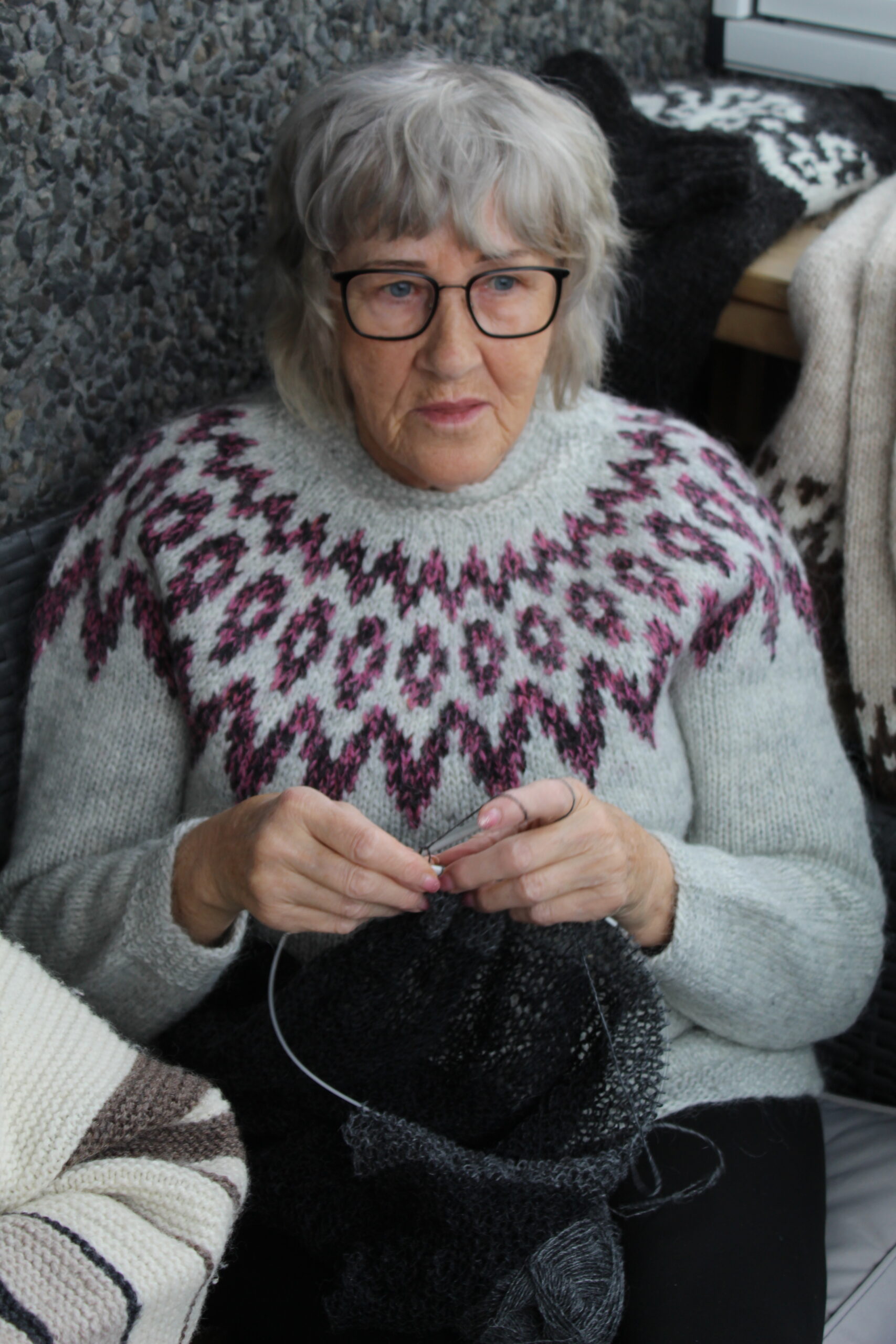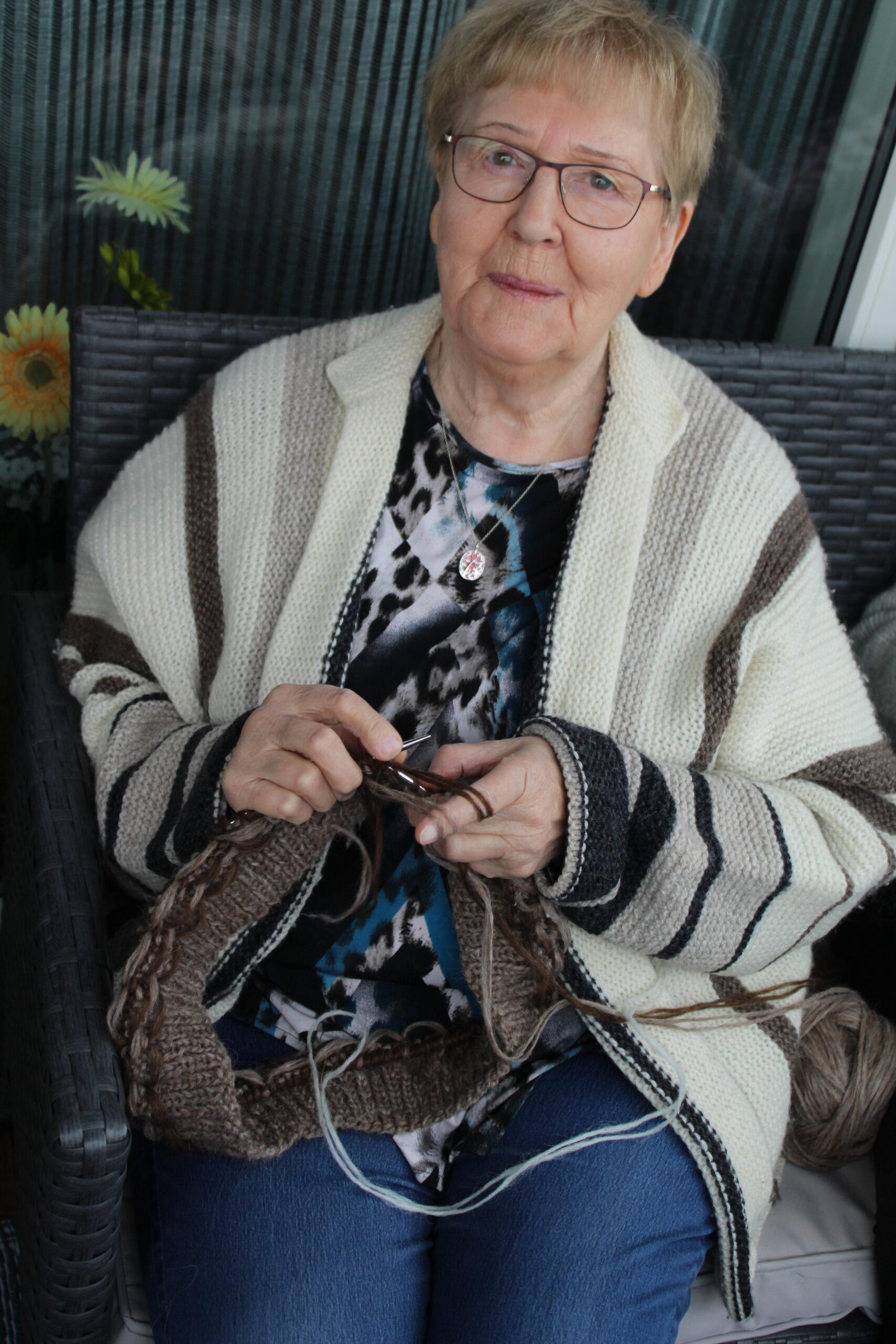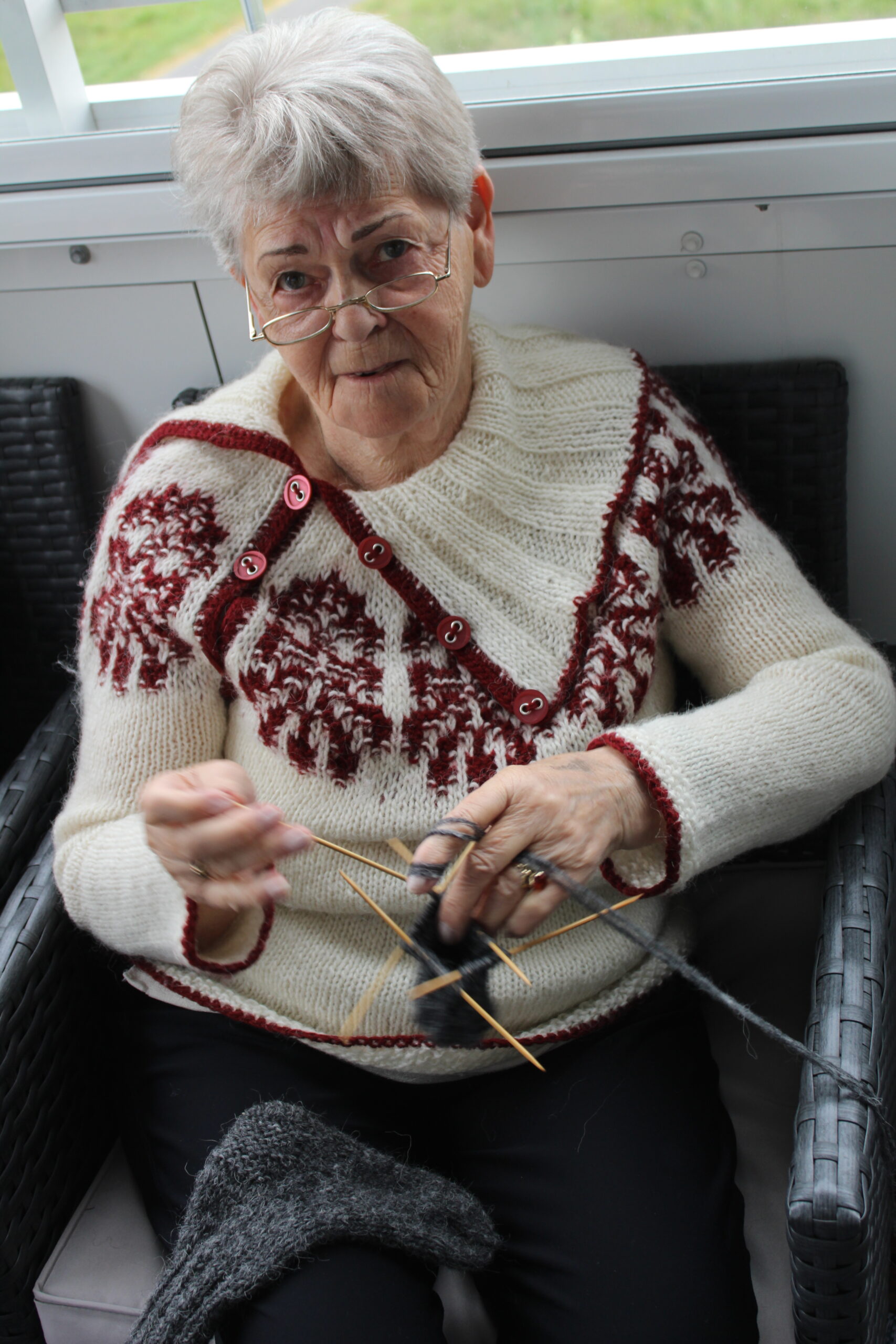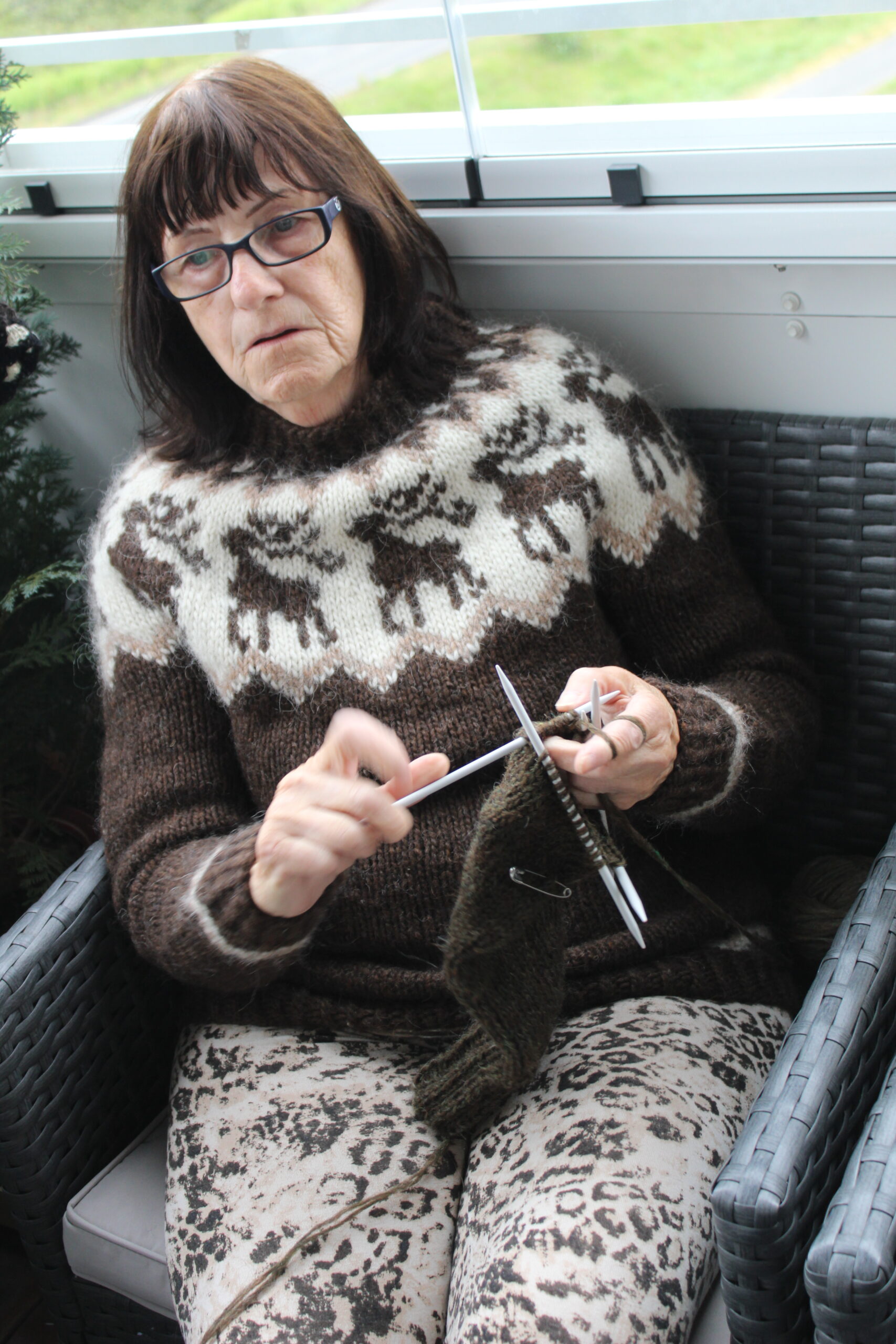
The Knitting Sisters from the Valley
Antonía (1935-2024), is one of the Teigasel sisters. She has a long history of handcrafts where she made all kind of handcrafts, bags and jewelry from various raw material such as stones, vinyl records, reindeer skin, tree branches and wool. For decades Antonía has been known for her enthusiasm for handcrafted materials and has carved her products to perfection. The last five years before she died, she stayed at a retirement home at Egilsstadir, where she literally changed her room into a handcraft workshop, passionately working on her various handcrafts many of which you can see here today.
Sisters from the farm Teigasel
The sisters were born and raised on the farm Teigasel which is located at the other end of the Valley on the east side of the Jökulsá river. Their parents, Sigurdur and Margrét had 9 children, four boys and 5 girls, born between 1935 – 1952. The five girls have lived on various farms in the Valley and some of their descendants are farmers and live in the Valley today. On of the sisters, Kolla, lived at this farm Grund. Today, the sisters are senior citizens and their main activity during the winter is knitting all kinds of wool products with the hand made methods that have followed Icelanders for centuries.
History of the Lopapeysa
For Icelanders, knitting wool products has been the traditional way to produce warm and light wool sweater, socks, mittens and in the older days, also shoes with skin and wool. In fact, it has been an important part of Icelandic lifestyle and economy for more than 500 years. Nowadyas, knitting wool products are mainly done by the grandmothers. The practice is believed to have migrated from England, the Netherlands, and Germany at around the turn of the 16th century.
From where is the wool – The origin of the wool?
All wool products are hand knitted from sustainable and warm wool form the sheep’s of the Valley. Icelandic sheep wool is unique as it contains two different types of hair: The outer layer is composed of coarse, long hair known in Icelandic as tog, a tough and water-resistant layer. Underneath, there is a layer of short hair, called þel. It is finer and softer. The two different layers can be separated and used i.e. for different types of yarn.
The wool sweater pattern is unique and give the Icelandic wool sweater (Lopapeysa) a special characteristics. The wool products kept Icelanders warm for centuries and although not a widely used before is still used by many Icelanders for the same purpose as before.